I do not usually write about this kind of thing. This blog is normally about products and the small everyday decisions that go with them, not the news, and certainly not a school shooting in the Philippines. But yesterday morning, something happened a few hundred kilometers south of me that I have not been able to put down, so I am going to write about it.
What happened in Tacloban
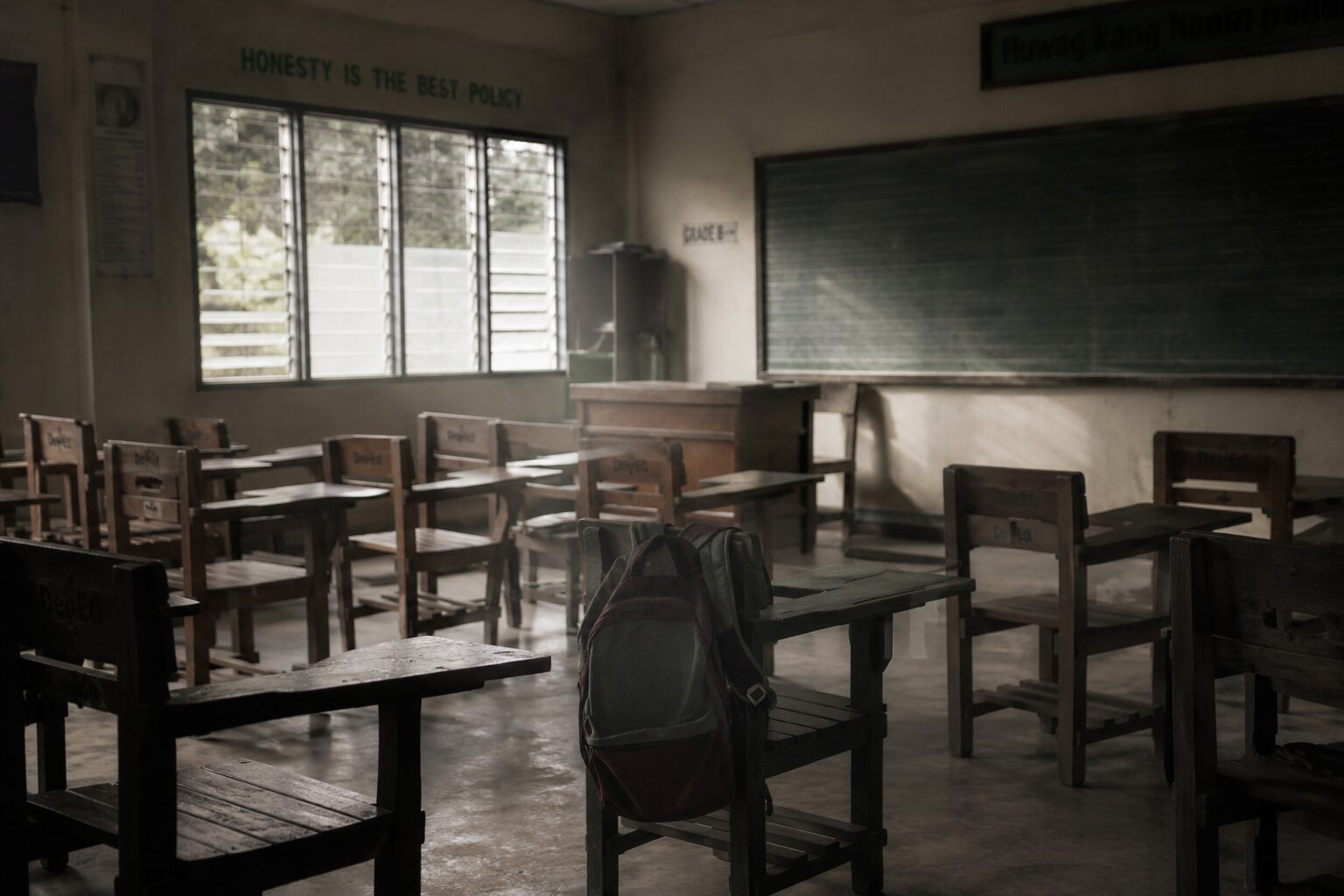
On Monday, June 22, at around 9:20 in the morning, two students walked into San Jose National High School in Barangay San Jose, Tacloban City, and opened fire while classes were ongoing. Three students were killed. The number of wounded climbed through the day as more were accounted for, from five to seven and eventually to thirteen in the later reporting. The two who did it were arrested, one at the scene and one after a short manhunt. They are fourteen and fifteen years old. They were Grade 9 and Grade 10 students at the same school, one of them a repeater who had been held back. Police say the motive was a grudge over bullying, and that they fired more or less randomly inside the campus rather than hunting specific people, which means the children who were actually shot may not even be the ones the shooters had a grievance with. That detail is still being checked.
The weapons are their own small horror. One was a .38 revolver registered to a security agency in Cebu City. The other was a 9mm Glock that reportedly belonged to a policewoman, who happens to be the aunt of one of the boys. So this was not two kids who scraped together a homemade weapon. This was real, registered firepower that should have been locked somewhere a fourteen year old could never reach, and instead it ended up in his hands.
Why a school shooting in the Philippines is not what we expect
There is a reflex, when something like this happens, to reach for the American comparison. A school shooting in the Philippines is not the same thing as a school shooting in the United States, and I do not mean that the American version is normal, because it is not, no matter how routine the coverage there has started to feel. I mean that this is something we genuinely do not expect here. We are not a country where you can pick up a rifle in the same trip as your groceries. Guns exist, and gun violence is sadly common in other corners of Philippine life, but two teenagers opening fire inside a classroom belongs to a different place in our heads entirely. Part of why this has shaken people so badly is that it arrived somewhere we quietly believed it could not reach.
And yet the firepower was already here, close at hand. Not bought off a shelf, but pulled from the world these boys actually live in, a relative’s service weapon, and a security agency’s gun. So even in a country that does not sell pistols beside the cereal, the danger was one careless lock away from a child who meant to use it. That should unsettle us more than the easy comparison to somewhere else does, because it means the problem is not only the law on paper. It is the gun in the drawer at home.
Where I land, and where I do not
Because of how our law works, the fourteen year old is exempt from criminal liability entirely. The provision is Section 6 of Republic Act 9344, the Juvenile Justice and Welfare Act, as amended by Republic Act 10630 in 2013, which says that a child fifteen years of age or under at the time of the offense cannot be held criminally liable and is placed in an intervention program instead. The fifteen year old sits right on the line, because the same section keeps a child above fifteen but below eighteen exempt as well, unless a court finds he acted with discernment, meaning he grasped what he was doing and what it would cause. So the younger boy is shielded from whatever he understands, and whether the older one faces anything at all turns on a single finding about discernment.
“SEC. 6. Minimum Age of Criminal Responsibility. – A child fifteen (15) years of age or under at the time of the commission of the offense shall be exempt from criminal liability. However, the child shall be subjected to an intervention program pursuant to Section 20 of this Act.
“A child is deemed to be fifteen (15) years of age on the day of the fifteenth anniversary of his/her birthdate.
“A child above fifteen (15) years but below eighteen (18) years of age shall likewise be exempt from criminal liability and be subjected to an intervention program, unless he/she has acted with discernment, in which case, such child shall be subjected to the appropriate proceedings in accordance with this Act.
“The exemption from criminal liability herein established does not include exemption from civil liability, which shall be enforced in accordance with existing laws.”
“SEC. 20. Children Below the Age of Criminal Responsibility. – If it has been determined that the child taken into custody is fifteen (15) years old or below, the authority which will have an initial contact with the child, in consultation with the local social welfare and development officer, has the duty to immediately release the child to the custody of his/her parents or guardian, or in the absence thereof, the child’s nearest relative. The child shall be subjected to a community-based intervention program supervised by the local social welfare and development officer, unless the best interest of the child requires the referral of the child to a youth care facility or ‘Bahay Pag-asa’ managed by LGUs or licensed and/or accredited NGOs monitored by the DSWD.
“The local social welfare and development officer shall determine the appropriate programs for the child who has been released, in consultation with the child and the person having custody over the child. If the parents, guardians or nearest relatives cannot be located, or if they refuse to take custody, the child may be released to any of the following:
“(a) A duly registered nongovernmental or religious organization;
“(b) A barangay official or a member of the Barangay Council for the Protection of Children (BCPC);
“(c) A local social welfare and development officer; or, when and where appropriate, the DSWD.
“If the child has been found by the local social welfare and development officer to be dependent, abandoned, neglected or abused by his/her parents and the best interest of the child requires that he/she be placed in a youth care facility or ‘Bahay Pag-asa’, the child’s parents or guardians shall execute a written authorization for the voluntary commitment of the child: Provided, That if the child has no parents or guardians or if they refuse or fail to execute the written authorization for voluntary commitment, the proper petition for involuntary commitment shall be immediately filed by the DSWD or the Local Social Welfare and Development Office (LSWDO) pursuant to Presidential Decree No. 603, as amended, otherwise known as ‘The Child and Youth Welfare Code’ and the Supreme Court rule on commitment of children: Provided, further, That the minimum age for children committed to a youth care facility or ‘Bahay Pag-asa’ shall be twelve (12) years old.”
“SEC. 20-A. Serious Crimes Committed by Children Who Are Exempt From Criminal Responsibility. – A child who is above twelve (12) years of age up to fifteen (15) years of age and who commits parricide, murder, infanticide, kidnapping and serious illegal detention where the victim is killed or raped, robbery, with homicide or rape, destructive arson, rape, or carnapping where the driver or occupant is killed or raped or offenses under Republic Act No. 9165 (Comprehensive Dangerous Drugs Act of 2002) punishable by more than twelve (12) years of imprisonment, shall be deemed a neglected child under Presidential Decree No. 603, as amended, and shall be mandatorily placed in a special facility within the youth care faculty or ‘Bahay Pag-asa’ called the Intensive Juvenile Intervention and Support Center (IJISC).
“In accordance with existing laws, rules, procedures and guidelines, the proper petition for involuntary commitment and placement under the IJISC shall be filed by the local social welfare and development officer of the LGU where the offense was committed, or by the DSWD social worker in the local social welfare and development officer’s absence, within twenty-four (24) hours from the time of the receipt of a report on the alleged commission of said child. The court, where the petition for involuntary commitment has been filed shall decide on the petition within seventy-two (72) hours from the time the said petition has been filed by the DSWD/LSWDO. The court will determine the initial period of placement of the child within the IJISC which shall not be less than one (1) year. The multi-disciplinary team of the IJISC will submit to the court a case study and progress report, to include a psychiatric evaluation report and recommend the reintegration of the child to his/her family or the extension of the placement under the IJISC. The multi-disciplinary team will also submit a report to the court on the services extended to the parents and family of the child and the compliance of the parents in the intervention program. The court will decide whether the child has successfully completed the center-based intervention program and is already prepared to be reintegrated with his/her family or if there is a need for the continuation of the center-based rehabilitation of the child. The court will determine the next period of assessment or hearing on the commitment of the child.”
Section 20 would ordinarily release a child this age to his parents, but Section 20-A, written into the law by the same 2013 amendment, carves out the gravest crimes. A child between twelve and fifteen who kills is treated as a neglected child and ordered into a locked facility called the Intensive Juvenile Intervention and Support Center for at least a year. So he is confined, but as a welfare case and not a convict, with no trial, no finding of guilt, and nothing entered against his name. The law still holds them civilly liable, so the families can sue for damages, but the criminal accounting is the part that disappears. Three families are burying their children this week, and the closest thing to a reckoning the law offers is a year or more in a welfare facility, with no verdict, no sentence, and no record.
I have been turning this over since I first read the story, and my instinct is that they should face this. We all went through being fourteen. We knew, at fourteen, that you do not shoot people. The idea that a child this age has no understanding of what he did when he brought a loaded handgun to school does not match anything I remember about being that age, and I doubt it matches your memory either.
I know the counterargument, and I do not think the people making it are fools. The developmental science is fairly settled that the part of the brain that stops you from acting on a violent impulse keeps maturing well past your teens, and that knowing something is wrong is not the same as being able to stop yourself in the moment. I can grant all of that and still believe that a crime this deliberate, with a gun smuggled in and a grudge behind it, asks for more than counseling.
A system that fails in both directions
But the more I read, the more I realized my anger was pointed at the wrong target. The real scandal is not that the law protects minors. It is that our system protects them on paper and then abandons everyone. The facilities that are supposed to rehabilitate these children, the Bahay Pag-asa centers, are chronically underfunded and overcrowded. Earlier this year, the Commission on Human Rights documented serious problems inside them, including abuse by staff, jail-like conditions, and cases that drag on so long that children grow into adults while waiting for a hearing that keeps getting reset. So the families of the victims get no accountability, and the offenders get no real rehabilitation. We have built a system that fails in both directions at once and calls it compassion.
A child who commits something this serious should face an actual trial and actual custodial consequences, but in a facility built for children and kept separate from adult criminals, because mixing them with hardened adults is where the abuse and the next generation of offenders are made. That is not me asking for a harsher philosophy. It is I asking that we deliver the one we already legislated and pair it with consequences that mean something. We wrote a law that promised both protection and reform, and then we never funded the half that was supposed to do the reforming.
Three children are gone. Whatever we decide to feel about the two who killed them, the least we owe everyone involved is a system that does what it claims to do. Right now, we do not have one.